Private Jet Detailing: What It Involves and Why It Matters
• 3 min read
A business jet is judged the moment a passenger walks up the airstair. Paintwork, brightwork, cabin leather and carpets all send a message about how the aircraft is cared for. Professional detailing is about more than appearance, though. Done properly, it protects the aircraft, supports its maintenance, and helps hold its value.
Here’s what a proper private jet detail involves, and why it’s worth doing well.
Why aircraft detailing is different from cleaning a car
Aircraft surfaces, coatings and systems are far more sensitive than a car’s. The wrong chemical can damage paint, seals or composite panels. Water or product in the wrong place can affect sensors and probes. A careless polisher near a static port or pitot tube can cause real problems.
That’s why aircraft detailing should always:
use products approved for aviation surfaces, and follow the aircraft manufacturer’s guidance
cover and protect probes, sensors, vents and openings before any work starts
follow the airport’s or FBO’s rules on washing, water use and chemicals
be carried out by people who understand how to work safely on and around aircraft
What a professional exterior detail covers
Wash or dry wash. Many airports restrict water use on the apron, so a dry wash is often the best option. It lifts dirt using specialist products and microfibre cloths rather than hoses.
Leading edges and bug removal. Wing and tail leading edges collect insects and grime, especially in summer. Removing them carefully helps protect the surface.
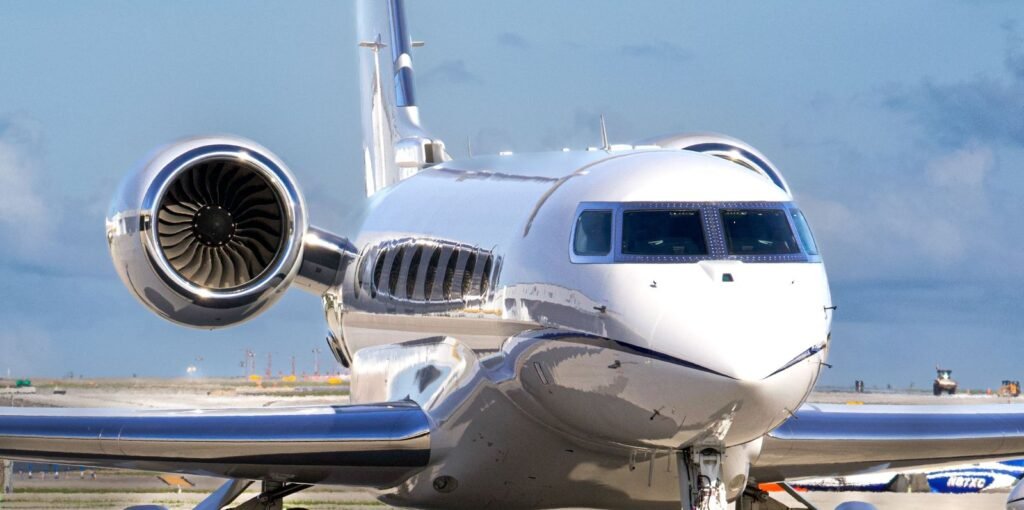
Brightwork polishing. Polished engine inlets and trim are a signature feature of many business jets. Keeping them bright takes time and the right technique.
Paint enhancement and protection. Machine polishing removes light oxidation and swirl marks, and a protective sealant or coating then helps the finish resist weather, UV and contamination between details.
Wheel wells and landing gear areas. These collect brake dust, grease and grime. Careful cleaning keeps them presentable and makes inspection easier.
What a professional interior detail covers
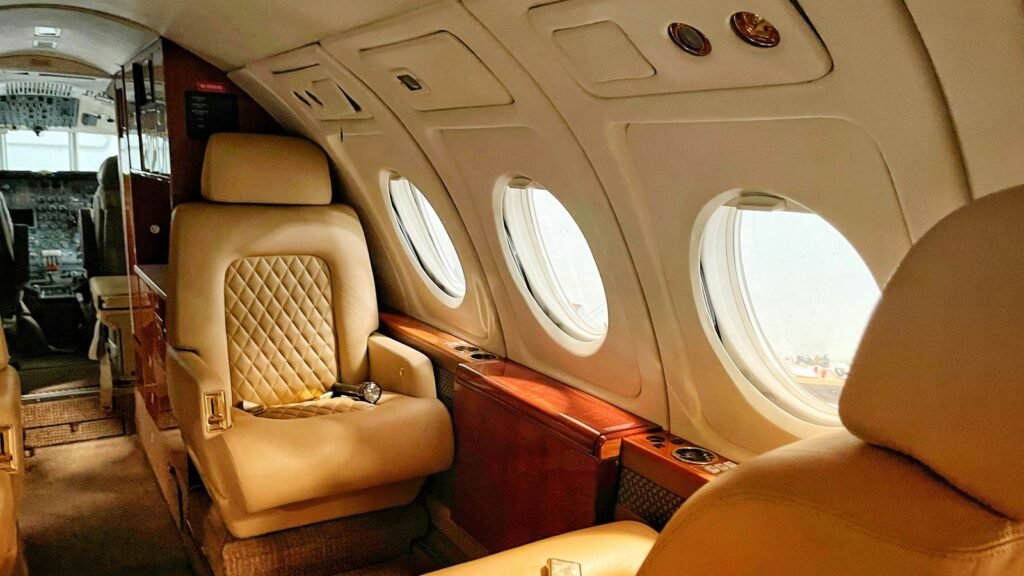
Leather and upholstery. Cabin leather is cleaned and conditioned so it stays supple and doesn’t crack or fade.
Carpets and soft furnishings. Deep cleaning removes stains and odours that ordinary vacuuming won’t reach.
Headliners, sidewalls and woodwork. These are cleaned with products suited to each material. Veneers and high-gloss wood need particular care.
Galley and lavatory. Both are thoroughly cleaned and sanitised, to a standard passengers notice straight away.
Cockpit. Surfaces, glareshields and screens are cleaned with care around instruments and controls.
How often should a private jet be detailed?
It depends on how the aircraft is used and where it’s based. As a general guide:
Aircraft flying frequently benefit from regular light cleans between flights, with a full detail at planned intervals.
Coastal bases expose aircraft to salt, which makes regular exterior cleaning more important.
Winter operations can leave de-icing fluid residue on surfaces that needs removing.
Summer flying brings heavy insect contamination on leading edges.
The best approach is a detailing plan agreed around the aircraft’s schedule, so the work never gets in the way of flying.
Detailing before a sale, lease return or delivery
First impressions count when an aircraft changes hands. A professionally detailed aircraft photographs better, shows better at viewings, and gives buyers confidence that it has been well looked after.
Detailing also matters at the end of a lease or before delivery to a new owner, when the aircraft’s condition is being assessed. A thorough detail, supported by before-and-after photographs, puts the aircraft in the best possible light.
Detailing supports good maintenance
A clean aircraft is easier to inspect. When the surfaces are clean, engineers can spot paint damage, fluid leaks, corrosion or loose fasteners more easily. Detailing also takes the team close to the whole airframe, so any concerns can be flagged early, before they become bigger problems.
Talk to First Response Aviation Group
We provide professional aircraft detailing for business jet and private aircraft owners, operators and brokers across the UK, Europe and worldwide. That includes detailing before a sale or delivery, alongside our aircraft sales support and pre-purchase inspections.
To discuss your aircraft, call our 24-hour concierge line on 01268 204 607 or send us a message.
From the RAF to running his own business since 2018, Carl Griffiths set up First Response Aviation Group to give aircraft owners one dependable team on the ground.