Aircraft Detailing vs Car Detailing: Why Aviation Needs Specialists
• 5 min read
Aircraft detailing vs car detailing: on the surface, both involve washing, polishing and protecting a valuable machine. In practice, an aircraft is a very different job. The materials, products, equipment and working environment all change, and so do the consequences of getting it wrong. Here are the seven key differences, and what they mean if you’re choosing someone to look after your aircraft.
Aircraft paint, polished metal and composites need different care from a car.
The short answer
A car detailer’s skills are a useful starting point, but they aren’t enough on their own. Aircraft detailing needs aviation-approved products, an understanding of the aircraft’s sensitive equipment, safe working at height, experience of the airport environment, and insurance that covers work on aircraft. That’s why aviation detailing is a specialist service.
At a glance
Car detailing
Aircraft detailing
Products
Car shampoos, waxes and polishes
Aviation-approved products suited to aircraft paint, acrylic windows and brightwork
Washing method
Pressure washers and hoses
Hand washing or waterless dry washing, with no high-pressure water near openings
Equipment to protect
Very little
Pitot probes, static ports, sensors, antennas and drains
Access
Ground level
Powered access and fall protection for upper fuselages and tails
Work environment
Driveway, car park or unit
Airside, with passes, escorts and strict FOD control
Insurance
Motor trade cover
Aviation liability insurance covering work on aircraft
Aircraft detailing vs car detailing: 7 key differences
1. The materials are different
Aircraft are built from thin aluminium panels, composites, specialist paint systems, acrylic windows and polished metal brightwork. Each reacts differently to cleaning products and polishing. Aircraft windows in particular can craze or cloud if they’re cleaned with the wrong solvent, and polished leading edges and engine inlets need their own polishes and techniques.
2. The products must be aviation-approved
Many car products contain silicones, strong solvents or harsh acids and alkalis. On an aircraft, these can damage paint and seals, contaminate surfaces before paint repairs, or encourage corrosion. A professional aircraft detailer uses products suited to aircraft materials, and follows the manufacturer’s guidance where it applies.
3. There’s sensitive equipment to protect
An aircraft’s exterior carries pitot probes, static ports, sensors, antennas and drains that feed information to the flight instruments. They must be protected before cleaning, kept free of wax and polish, and never hit with a pressure washer. A car has nothing comparable, which is one reason car detailing habits don’t transfer safely.
4. The scale and access are different
A business jet has many times the surface area of a car, and much of it is out of reach. Upper fuselages and T-tails need powered access equipment and fall protection, and only marked walkways on the wings should be stood on. A thorough job is planned, staffed and timed accordingly.
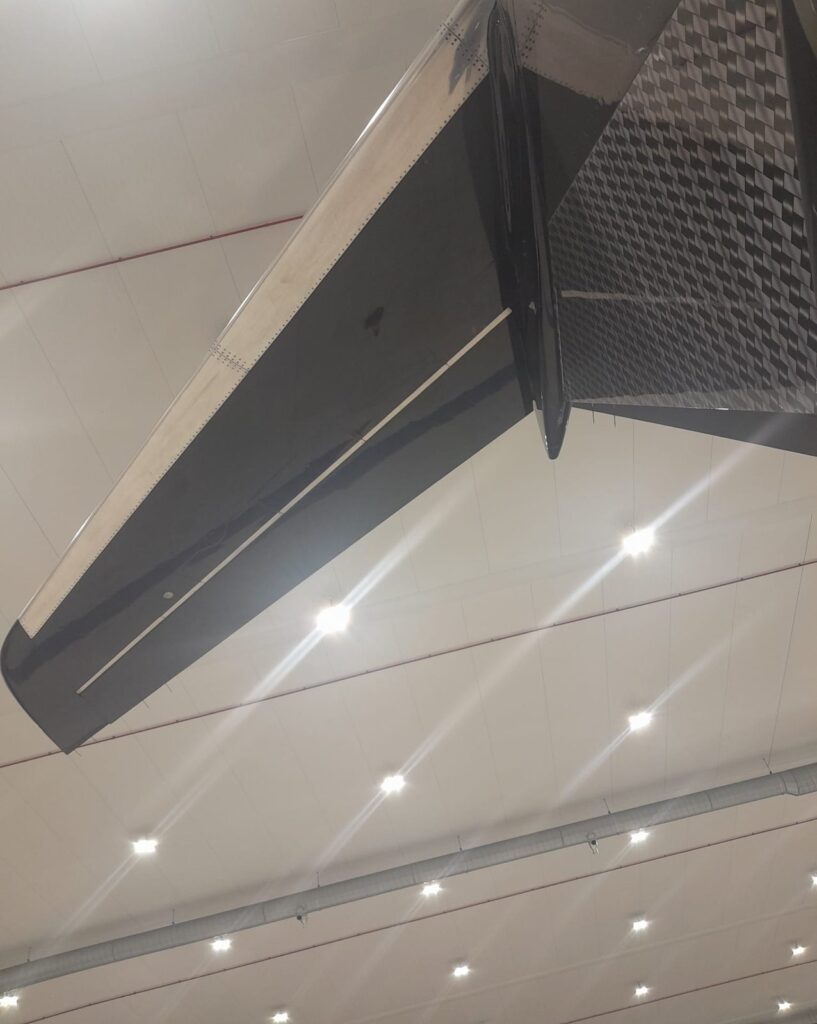
Working at height on tail surfaces calls for powered access and fall protection.
5. The airport is a controlled environment
Aircraft detailing takes place airside, where access, passes and escorts are arranged with the airport or FBO. Every cloth, tool and container must be accounted for, because loose items become foreign object debris (FOD), a serious hazard around aircraft. Many airports also restrict water use and run-off on the apron, which is why the waterless aircraft dry wash is so widely used.
6. The cabin is part of a certified aircraft
Cabin seats, carpets and panels are certified to strict standards, including fire performance. Over-wetting fabrics, using the wrong leather products or spraying cleaners onto cockpit panels can damage materials and equipment. Interior work needs low-moisture methods and products suited to aircraft furnishings, as our guide to private jet interior cleaning explains.
7. Insurance and accountability
A specialist aircraft detailer should hold aviation liability insurance that covers work on aircraft, and be able to show the certificate. They should record the condition of the aircraft before and after the work, and coordinate with the owner, operator or maintenance organisation where needed. For an asset worth millions, that accountability matters as much as the finish.
Can a car detailer clean an aircraft?
Some skills transfer well, particularly paint correction and an eye for detail. But without the right products, training, equipment, airside experience and insurance, a car detailer working on an aircraft is a risk to the aircraft, and potentially to its airworthiness. If you’re choosing someone to work on your aircraft, ask about their aviation experience first.
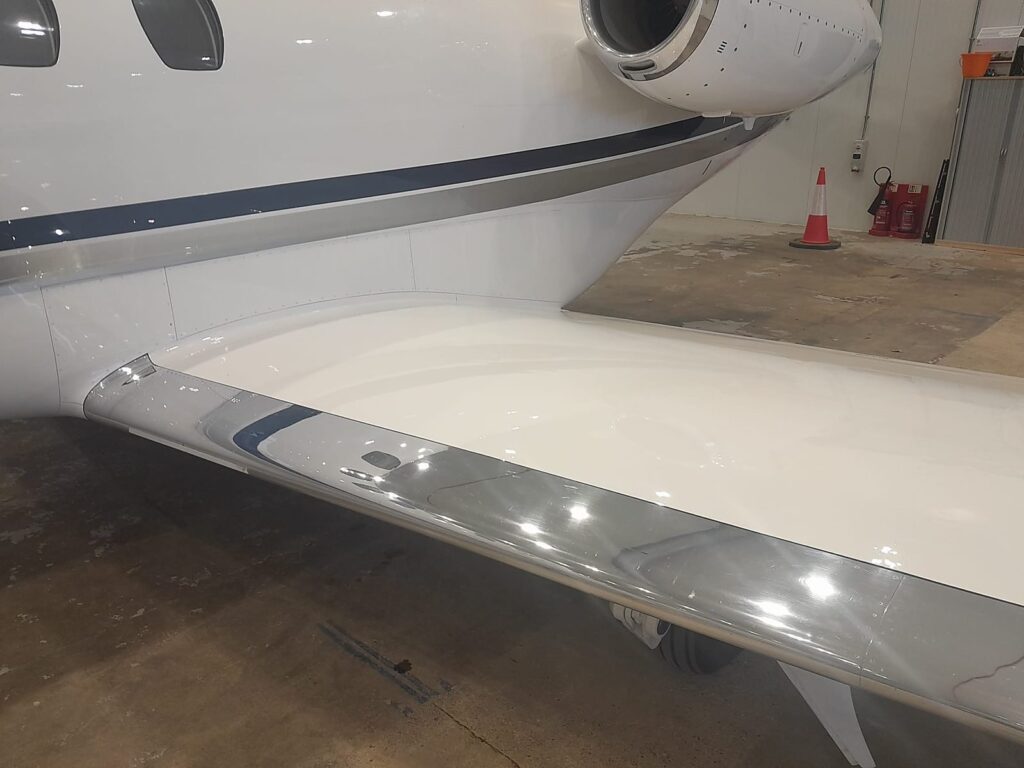
Brightwork and engine areas need aviation-approved polishes and techniques.
What it means for the cost
Aviation detailing costs more than car detailing because of the time, specialist products, access equipment, airside procedures and insurance involved. As a guide, our exterior wash starts from £1,000, and full detailing is quoted individually, based on the aircraft’s size, condition and the finish required. Our guide to aircraft cleaning costs in the UK explains what affects the price, and aircraft cleaning vs detailing explains the difference between the two services.
How to choose an aircraft detailer
Aviation experience: ask which aircraft types they’ve worked on, and for references
Insurance: aviation liability cover for work on aircraft, with a certificate
Products: aviation-approved products, and a clear approach to windows, sensors and brightwork
Airside experience: familiarity with airport access, FOD control and wash restrictions
Documentation: before-and-after photographs, and a clear scope and price
Coordination: willingness to work alongside your operator or maintenance organisation
Common questions
Can I use car wax or polish on my aircraft?
It isn’t recommended. Many car products contain silicones or abrasives that can damage aircraft paint, windows and seals, or interfere with future paint repairs. Use products suited to aircraft materials, or a specialist aircraft detailer.
Can you pressure wash an aircraft?
Not in the way you would a car. High-pressure water can force its way into probes, ports, seals and bearings. Aircraft are washed by hand, or dry washed without running water.
Does a car detailer’s insurance cover work on aircraft?
Usually not. Work on aircraft normally needs aviation liability insurance. Always ask to see the certificate before work starts.
Why does aircraft detailing cost more than car detailing?
The aircraft is far larger, needs specialist products and access equipment, and the work takes place airside, with the procedures and insurance that requires.
Which aircraft cleaning products are approved, why car products damage aircraft paint, windows and brightwork, and how to use aircraft cleaners safely.
What aircraft exterior cleaning involves: wet and dry washing, brightwork polishing, paint protection, winter care, how often to clean and typical costs.