Aircraft Exterior Cleaning: A Complete Guide for Private Jet Owners
• 5 min read
Aircraft exterior cleaning does far more than make a private jet look good on the apron. Exhaust residue, insects, airport grime and de-icing fluid all build up on the paintwork, windows and brightwork, and if they’re left, they can stain, dull and even damage the surfaces that protect the aircraft. This guide explains what a proper exterior clean involves, the different methods, and how often your aircraft needs one.
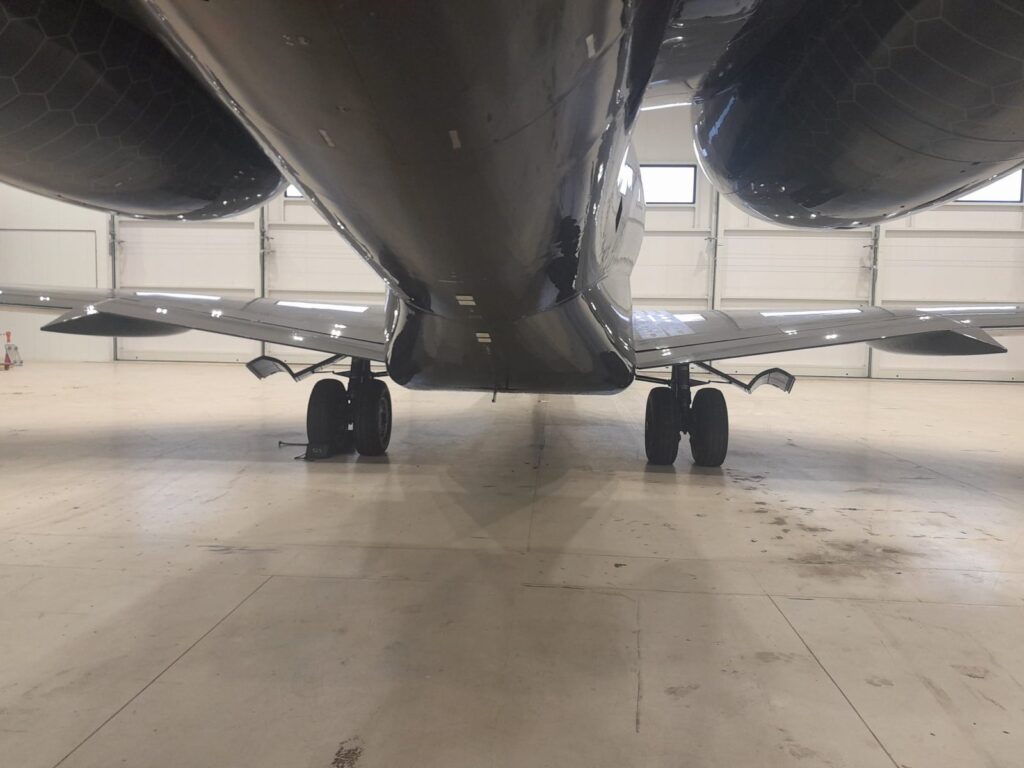
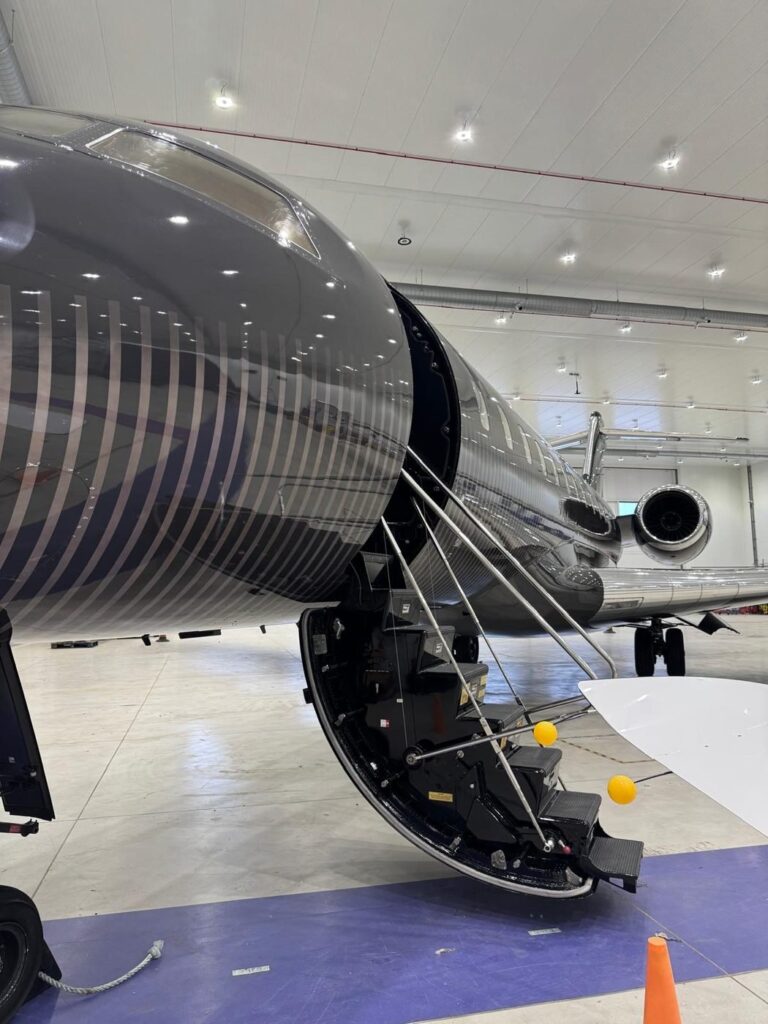
A high-gloss finish on the underside, with the main landing gear and wheel wells cleaned.
What aircraft exterior cleaning includes
A thorough exterior clean covers every external surface, with extra attention on the areas that collect the most dirt:
Fuselage: removing exhaust staining, road film and general grime
Wings and tail: including the leading edges, where insects and debris build up
Engine cowlings and nacelles: the areas hit hardest by exhaust residue
Landing gear and wheel wells: degreasing and cleaning to keep inspections easy
Windows and windscreens: cleaned with products safe for acrylic and coated glass
Brightwork: polished metal surfaces such as leading edges, inlets and trim
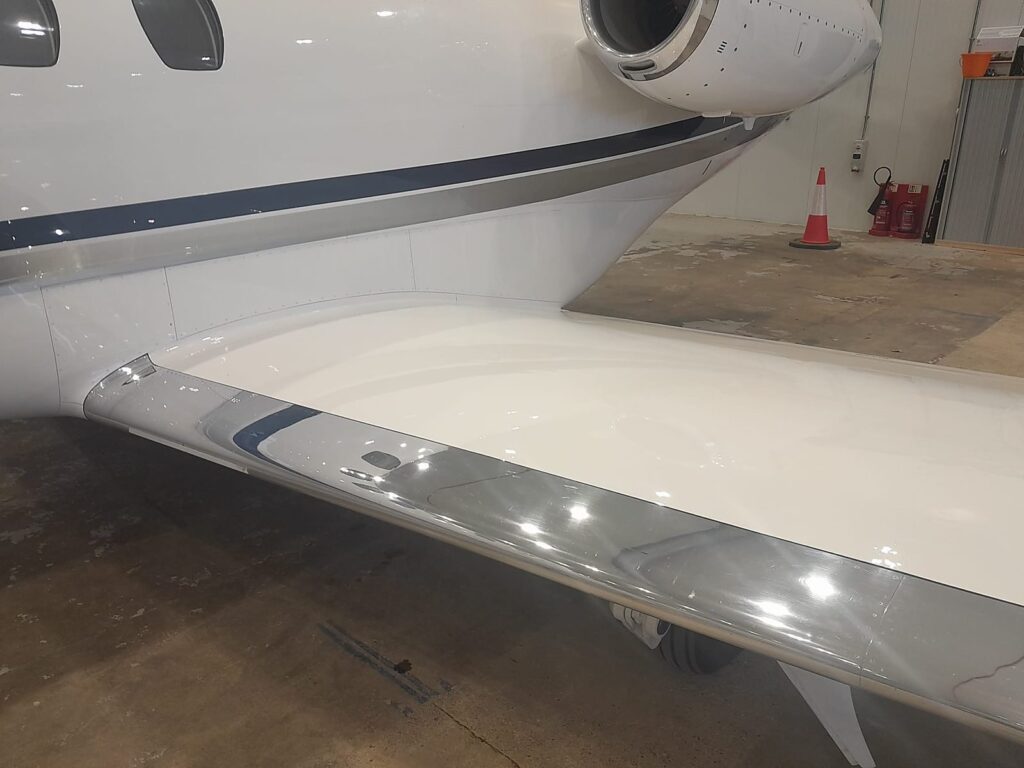
A clean, protected finish on the wing leading edge and engine.
Wet wash or dry wash?
There are two main ways to wash an aircraft, and the right one depends on the aircraft’s condition and where it’s parked.
A wet wash uses water and aviation-approved cleaning products, and suits heavily soiled aircraft, landing gear and areas that need degreasing. It needs a suitable wash area, as many airports restrict water use and run-off on the apron.
A dry wash cleans the aircraft by hand without running water, using specialist products that lift and encapsulate dirt. It can be carried out on the apron, in the hangar or at the FBO, and leaves a protective finish. Our guide to the aircraft dry wash explains more.
Many aircraft benefit from a combination: a dry wash for regular cleans, with a targeted wet wash where deeper cleaning is needed.
Book an exterior clean
Wash, dry wash, brightwork and paint protection, at your airport, planned around your schedule.
Polished metal, such as leading edges, engine inlets and trim, is one of the first things people notice on a private jet. Over time it oxidises and dulls. Brightwork polishing removes oxidation and restores a mirror finish, and regular care keeps it looking that way between polishes.
Leading edges collect insects and grime, and need regular attention.
Paint protection and ceramic coatings
Once the paint is clean, protecting it makes every future clean quicker and easier. A sealant or ceramic coating adds a durable layer that helps resist UV, exhaust staining and contamination, and helps water and dirt run off. For aircraft that fly often or are parked outside, protection can significantly reduce the time and cost of keeping them clean. Our aircraft detailing service covers paint correction and ceramic protection in more detail.
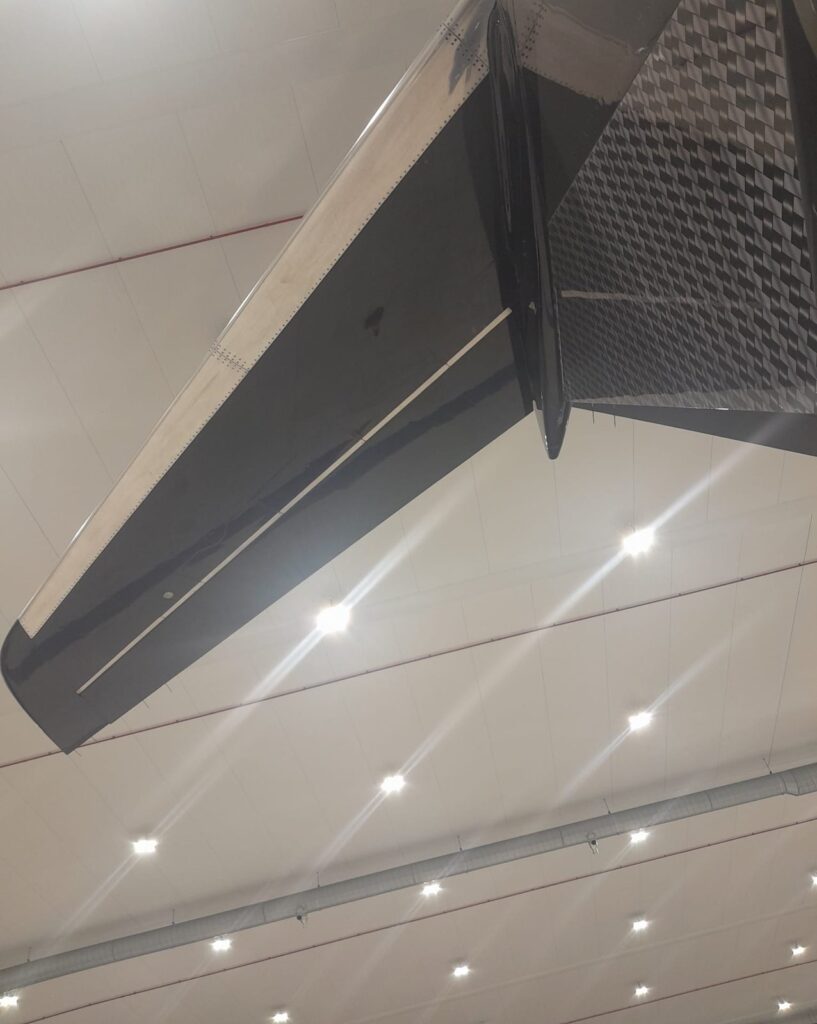
Brightwork polishing restores a mirror finish to polished metal.
How often should an aircraft be cleaned?
It depends on how often the aircraft flies, where it’s parked and the time of year. As a general guide:
Aircraft flying regularly: a light exterior clean every few weeks, with spot cleaning of exhaust areas and leading edges between flights
Aircraft parked outside: more frequent cleaning, as dust, pollution and bird droppings build up faster
Coastal or high-humidity airports: regular cleaning to remove salt deposits, which can encourage corrosion
Before a sale, delivery or important trip: a full exterior clean and polish, so the aircraft makes the right impression
Winter exterior cleaning
Winter brings its own challenges. De-icing fluid can leave residue on the paintwork and windows, road salt and grime are carried onto the apron, and short days and frost limit when washing can take place. Dry washing is particularly useful in winter, and our guide to winter aircraft care covers protecting your aircraft through the colder months.
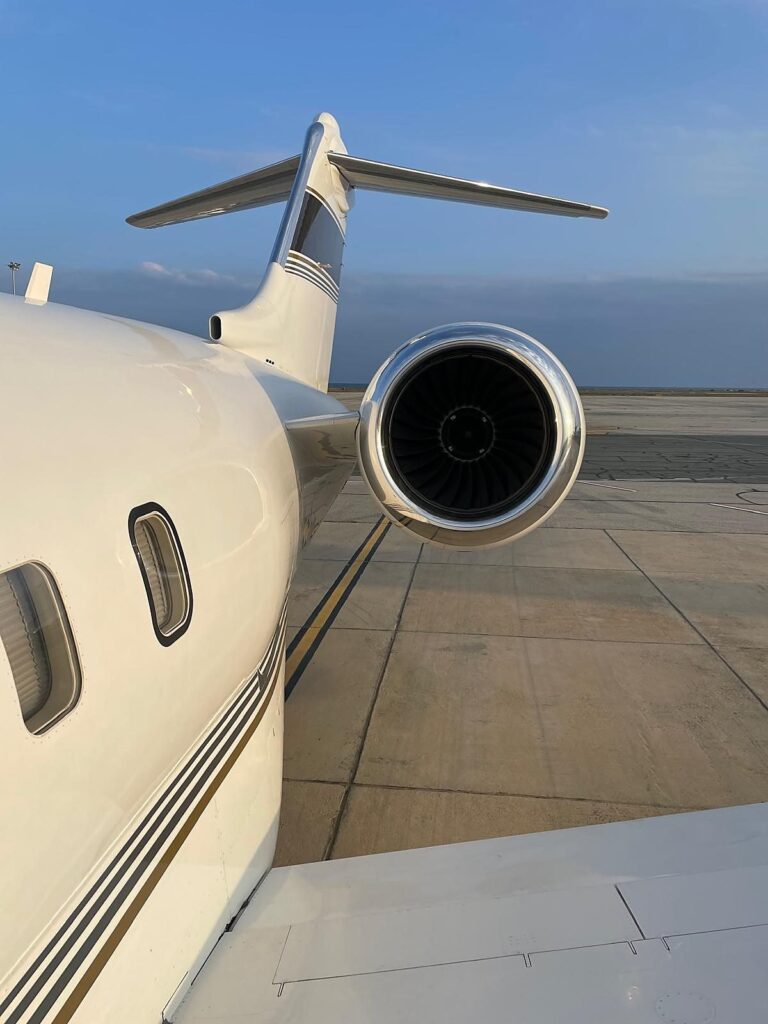
A high-gloss finish after an exterior clean in the hangar.
Why aviation-approved products matter
Aircraft paint, sealants, seals, acrylic windows and polished metal can all be damaged by the wrong chemicals. Household or automotive products may strip protective coatings, craze windows or leave residues that attract dirt. Professional aircraft exterior cleaning uses products suited to aircraft materials, applied with methods that protect sensors, seals and openings, following the manufacturer’s guidance where it applies.
How much does aircraft exterior cleaning cost?
The cost depends on the aircraft’s size, its condition and the work involved. As a guide, our exterior wash starts from £1,000. Brightwork polishing and paint protection are priced according to the aircraft and the finish required. Our guide to aircraft cleaning costs in the UK explains what affects the price, and our cleaning packages combine services at set levels.
Our aircraft exterior cleaning service
We clean aircraft at London-area airports, including Stansted, Southend, Biggin Hill, Farnborough, Luton, London City and Cranfield, and across the UK, working on the apron, in the hangar or at the FBO, and planning every job around your flying schedule. See our aircraft cleaning services for the full range, from turnaround cleans to scheduled cleaning plans.
Common questions about aircraft exterior cleaning
How long does an aircraft exterior clean take?
A standard exterior wash typically takes four to eight hours, depending on the aircraft’s size and condition. Polishing or a ceramic coating can take two to four days. We confirm timings before we start.
Can an aircraft be washed on the apron?
Often, yes. Where water use or run-off is restricted, a dry wash can be carried out on the apron. A wet wash may need a designated wash area or hangar.
Is a dry wash as good as a wet wash?
For regular cleaning, a dry wash is very effective and leaves a protective finish. Heavily soiled areas such as landing gear may still need a targeted wet clean.
Does exterior cleaning remove exhaust staining?
Yes. Exhaust residue is removed during the wash, and paint protection makes it easier to remove in future.
Do you clean aircraft in winter?
Yes. Exterior work needs suitable conditions, so if frost or heavy rain is forecast, we agree an alternative time, or work in a hangar where space is available.
Which aircraft cleaning products are approved, why car products damage aircraft paint, windows and brightwork, and how to use aircraft cleaners safely.
The seven key differences between aircraft and car detailing, from products and sensitive equipment to airside rules and insurance, and how to choose an aircraft detailer.